Global politics is constantly evolving as major international events reshape alliances, economic policies, and diplomatic relations between nations. From military conflicts and shifting power balances to economic sanctions and strategic partnerships, several key developments are influencing the future of international politics. Understanding these major world news events that are changing global politics helps individuals, businesses, and governments stay informed about global trends and their potential impact.
Rising Geopolitical Tensions Around the World
One of the most significant factors shaping global politics today is the rise in geopolitical tensions. Conflicts between major powers and regional disputes are becoming more frequent, affecting international stability and diplomatic relations.
For example, the ongoing conflict involving Russia and Ukraine has significantly impacted global political dynamics. The war has strengthened military alliances, especially with NATO countries increasing defense cooperation and military spending.
Similarly, tensions between China and Taiwan continue to influence diplomatic relations in the Asia-Pacific region. Many countries are closely monitoring the situation because any escalation could affect global trade routes and security.
The Middle East and Its Strategic Importance
The Middle East remains one of the most politically sensitive regions in the world. Conflicts and diplomatic negotiations in this region often have global consequences, particularly for energy markets and international security.
Countries such as Iran, Israel, and Saudi Arabia play crucial roles in regional geopolitics. Political tensions, military activity, and diplomatic negotiations between these nations often influence global oil prices and international policy decisions.
At the same time, international powers including United States continue to maintain strong political and military influence in the region.
The Growing Influence of China in Global Politics
Over the past decade, China has expanded its political and economic influence across many parts of the world. Through initiatives such as the Belt and Road Initiative, China is investing in infrastructure projects across Asia, Africa, and Europe.
These investments have strengthened China’s diplomatic relationships with many developing nations while also raising concerns among Western countries about economic dependency and geopolitical influence.
China’s growing technological and military capabilities are also changing the balance of global power, making it a key player in international politics.
Global Economic Policies and Trade Conflicts
Economic policies and trade relationships between major countries are another factor reshaping global politics. Trade disputes, sanctions, and tariffs can affect international markets and diplomatic relations.
For example, trade tensions between the United States and China have influenced global supply chains and international business strategies.
Additionally, economic sanctions imposed on countries like Russia have affected global markets, energy supplies, and political alliances.
These economic strategies are increasingly being used as tools of diplomacy and political pressure.
Climate Policy and International Cooperation
Climate change has become one of the most important issues in global politics. Governments around the world are negotiating policies to reduce carbon emissions and address environmental challenges.
International agreements such as the Paris Agreement aim to limit global warming and encourage cooperation between nations.
Climate policy now influences international relations, economic development strategies, and national security planning.
The Role of International Organizations
International organizations play an important role in managing global conflicts and promoting cooperation between nations.
Institutions such as the United Nations and World Trade Organization help coordinate diplomatic efforts, humanitarian aid, and global economic policies.
Although these organizations face challenges in resolving complex conflicts, they remain essential for maintaining international dialogue and cooperation.
How These Events Shape the Future of Global Politics
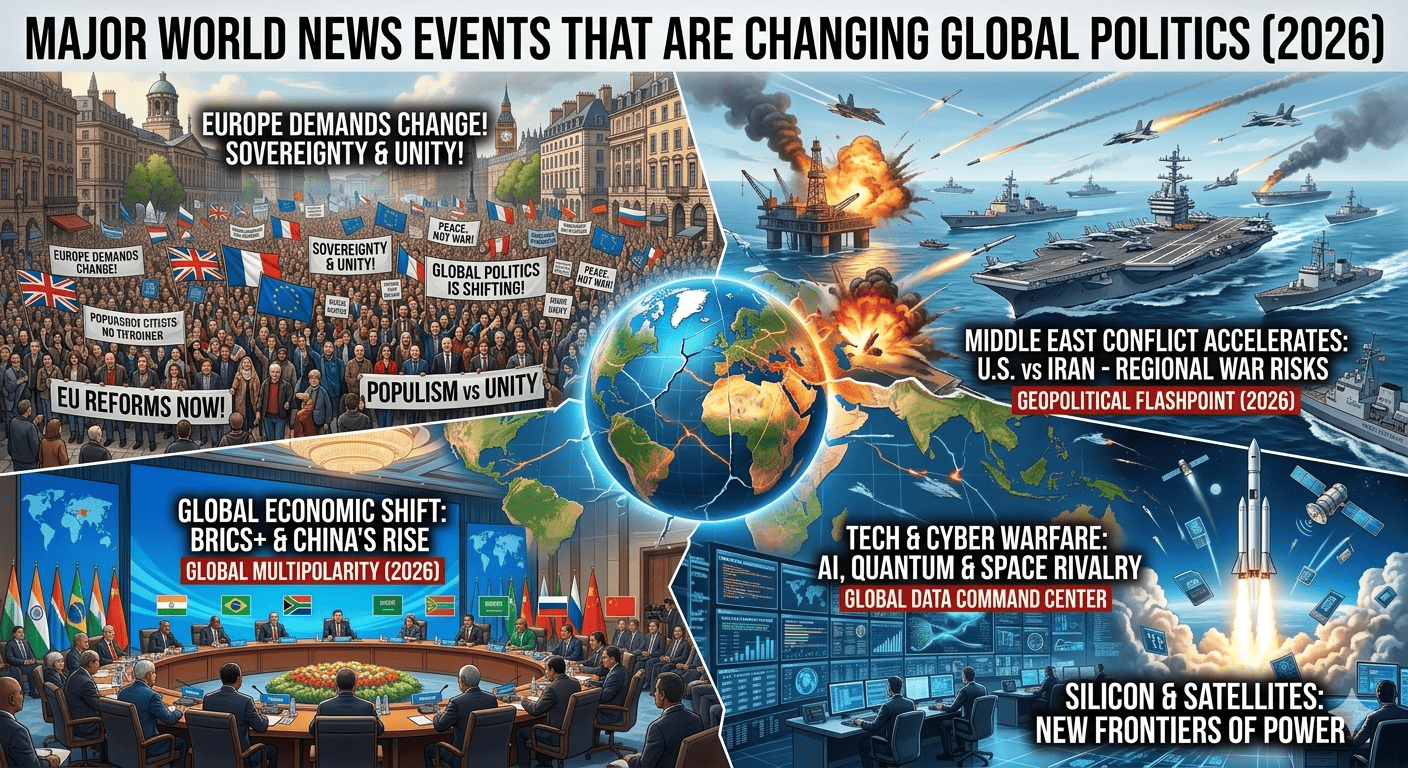
The combination of military conflicts, economic competition, climate policies, and diplomatic negotiations is reshaping the global political landscape. Countries are forming new alliances, strengthening defense systems, and developing strategies to protect their economic interests.
These changes may lead to a more multipolar world where several major powers share global influence rather than a single dominant superpower.
Understanding these developments helps people better comprehend international relations and how global decisions may affect everyday life.
Conclusion
Major world news events are continuously shaping global politics and redefining international relationships. Rising geopolitical tensions, the growing influence of China, Middle Eastern conflicts, economic trade disputes, and climate policy negotiations are among the key factors driving these changes.
As global politics continues to evolve, staying informed about these developments is essential for understanding the future of international relations, global economies, and worldwide security.