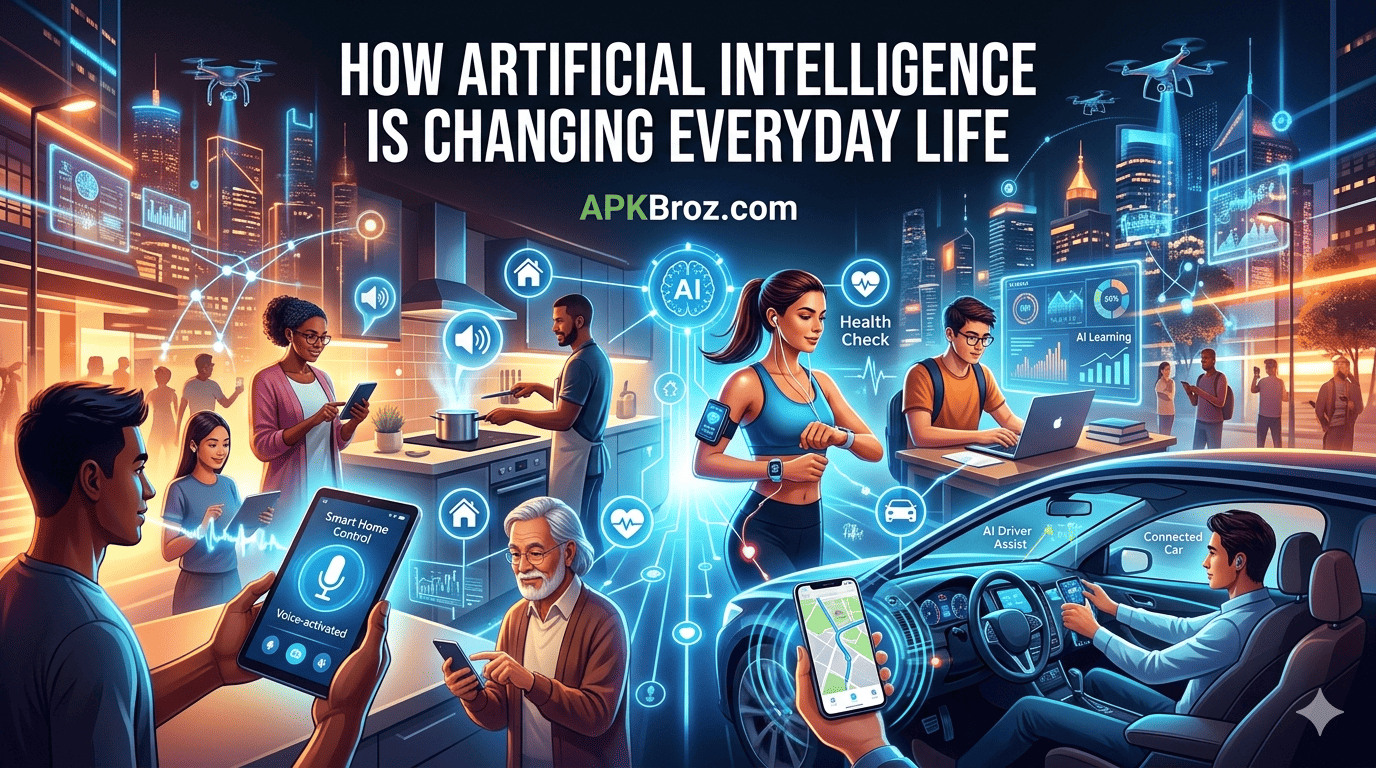
Artificial Intelligence (AI) is no longer a futuristic concept seen only in science-fiction movies. Today, AI is a powerful technology that is transforming the way people live, work, communicate, and solve problems. From smartphones to healthcare systems, AI has become a part of our daily routine. Companies like Google, Microsoft, Amazon, and OpenAI are continuously developing AI tools that make everyday tasks faster, smarter, and more efficient.
In 2026, AI is influencing almost every industry and changing how people interact with technology.
1. AI in Smartphones and Personal Assistants
Most modern smartphones use AI to improve user experience. Virtual assistants like Google Assistant, Siri, and Amazon Alexa help users perform tasks using voice commands.
AI allows smartphones to:
- Recognize voice commands
- Improve photo quality automatically
- Suggest replies in messages
- Predict user behavior and preferences
For example, AI-powered cameras automatically adjust brightness, focus, and colors to capture better photos without manual settings.
2. AI in Healthcare
Artificial Intelligence is revolutionizing the healthcare industry by helping doctors diagnose diseases faster and more accurately. AI systems can analyze medical data, detect patterns, and assist in treatment planning.
Hospitals and research organizations such as World Health Organization are exploring AI solutions for:
- Early disease detection
- Medical imaging analysis
- Drug discovery
- Personalized treatment plans
AI tools can now detect serious conditions like cancer earlier, improving patient survival rates and reducing healthcare costs.
3. AI in Online Shopping and Recommendations
E-commerce platforms use AI to understand customer behavior and recommend products. Companies like Amazon and Alibaba Group analyze browsing history, purchases, and preferences to show personalized recommendations.
Benefits of AI in online shopping include:
- Personalized product suggestions
- Faster customer support through chatbots
- Fraud detection and secure transactions
- Smart inventory management
This helps customers find what they need quickly while improving the shopping experience.
4. AI in Transportation
AI is also transforming transportation systems around the world. Self-driving technology developed by companies like Tesla, Inc. and Waymo uses AI to analyze road conditions, detect obstacles, and navigate safely.
AI is used in transportation for:
- Autonomous vehicles
- Smart traffic management
- Route optimization
- Predictive maintenance for vehicles
These innovations aim to reduce traffic accidents, improve efficiency, and make travel safer.
5. AI in Education
Education is becoming smarter with AI-powered learning platforms. Tools like Duolingo and Khan Academy use AI to personalize lessons based on student performance.
AI in education helps with:
- Adaptive learning systems
- Automated grading
- Personalized study recommendations
- Virtual tutoring
This allows students to learn at their own pace and receive instant feedback.
6. AI in Entertainment and Social Media
Streaming services and social media platforms rely heavily on AI algorithms to recommend content to users. Platforms like Netflix, TikTok, and YouTube use AI to analyze user behavior and show relevant videos, movies, and posts.
AI enhances entertainment by:
- Suggesting movies and shows
- Creating personalized playlists
- Filtering harmful content
- Improving video and audio quality
This ensures users spend less time searching and more time enjoying content.
7. AI in Smart Homes
Smart home technology is becoming increasingly popular thanks to AI. Devices such as smart speakers, thermostats, and security systems use AI to automate household tasks.
Smart home systems can:
- Control lighting and temperature automatically
- Detect unusual activity for security
- Optimize energy consumption
- Respond to voice commands
These features make homes more comfortable, secure, and energy-efficient.
Challenges and Concerns of AI
Despite its benefits, AI also raises concerns about privacy, job automation, and ethical use of technology. Governments and organizations are working to create regulations to ensure AI is used responsibly.
Some key challenges include:
- Data privacy risks
- Job displacement due to automation
- Algorithm bias
- Security threats
Balancing innovation with ethical responsibility will be crucial for the future of AI.
Conclusion
Artificial Intelligence is rapidly becoming an essential part of everyday life. From healthcare and education to transportation and entertainment, AI is making technology smarter and more helpful. As companies continue investing in AI research, its impact on society will only grow stronger in the coming years.
Understanding how AI works and how it affects daily life will help individuals and businesses adapt to this powerful technological revolution.